
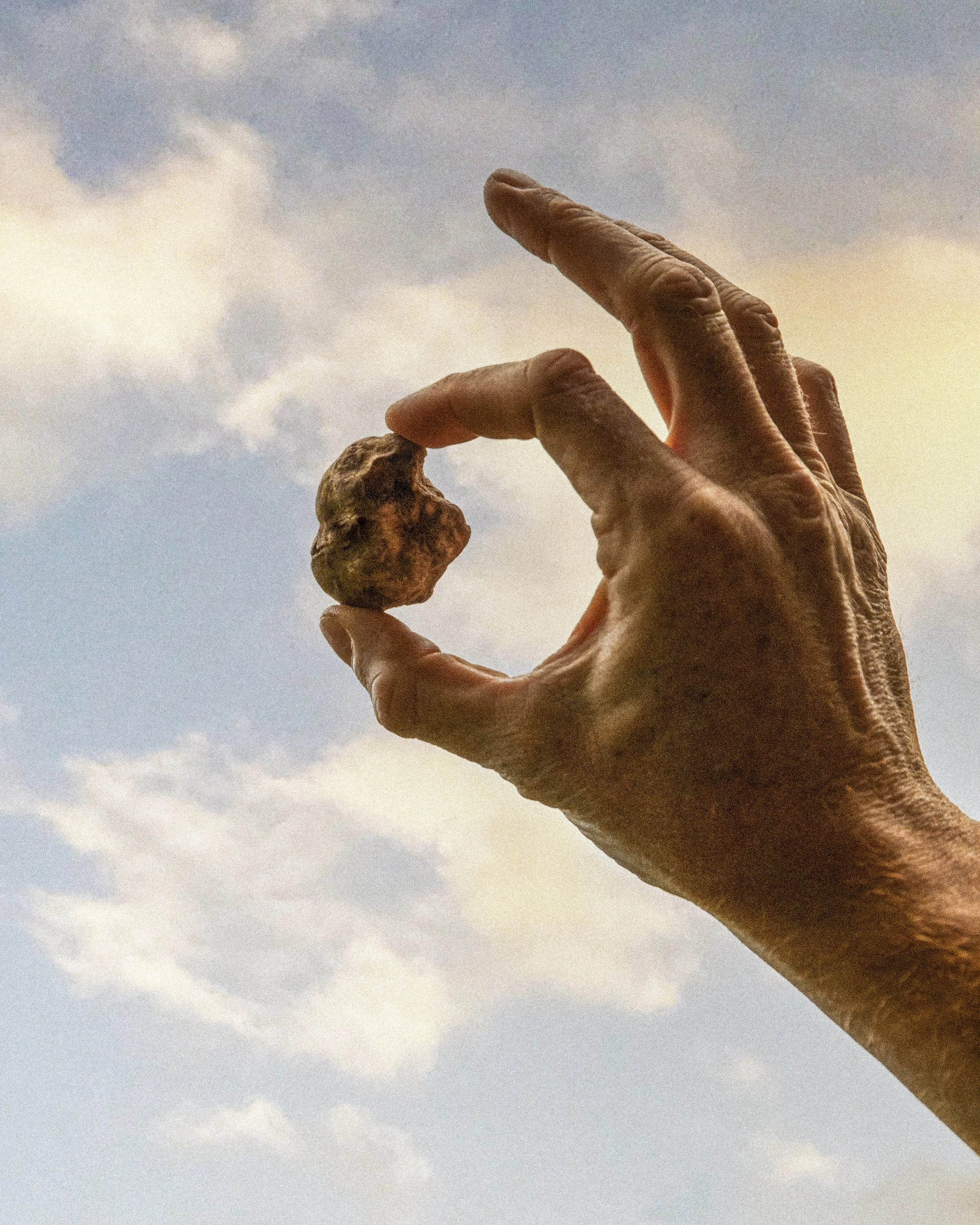
Every season tells its own story
— and brings its own truffle.
Two white truffles, one species, two stories of origin.
Among all truffles, two names stand above the rest: chiaro d’alba® and italo. Both are white truffles of the Tuber Magnatum Pico, both rare, prized and unmistakable.
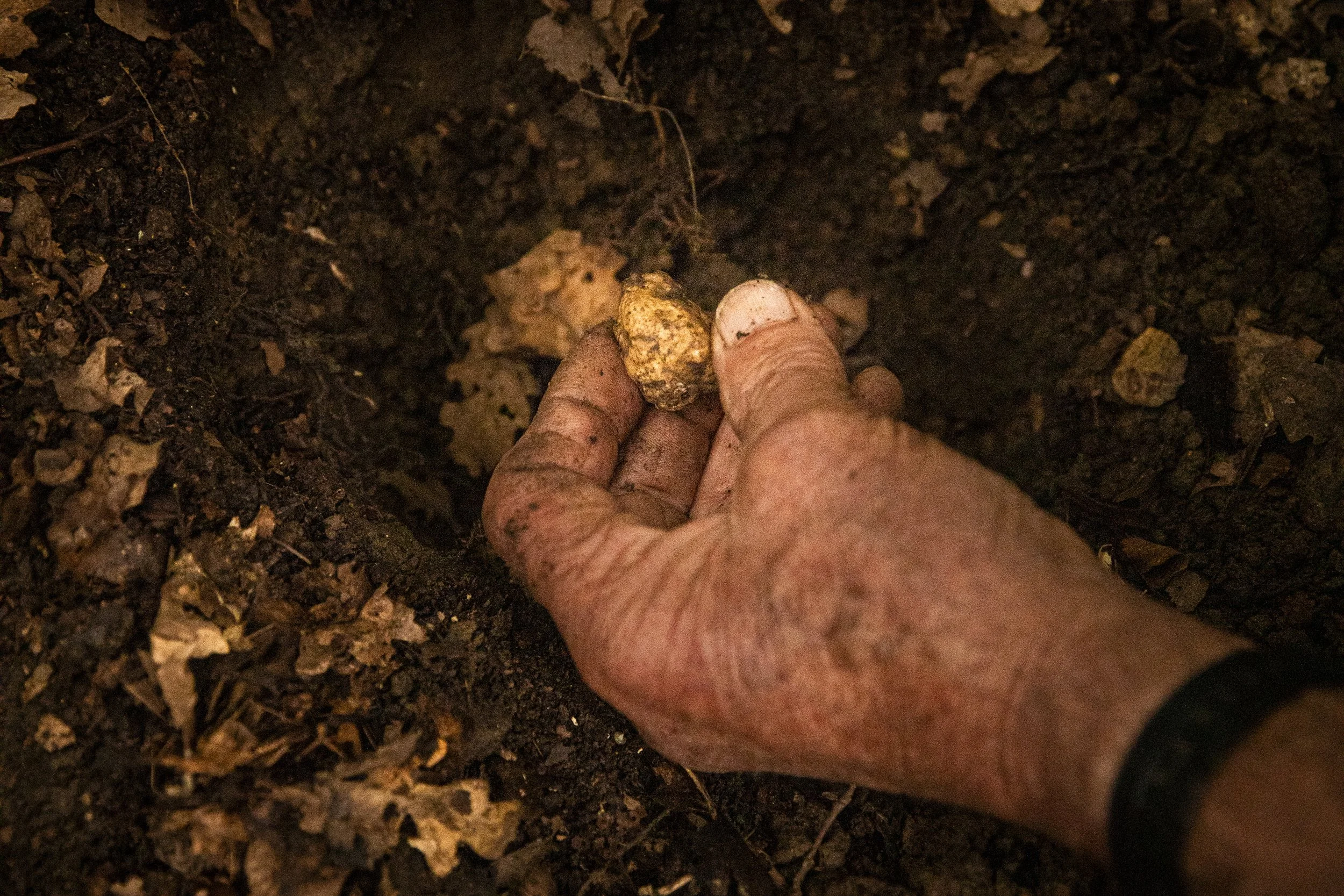
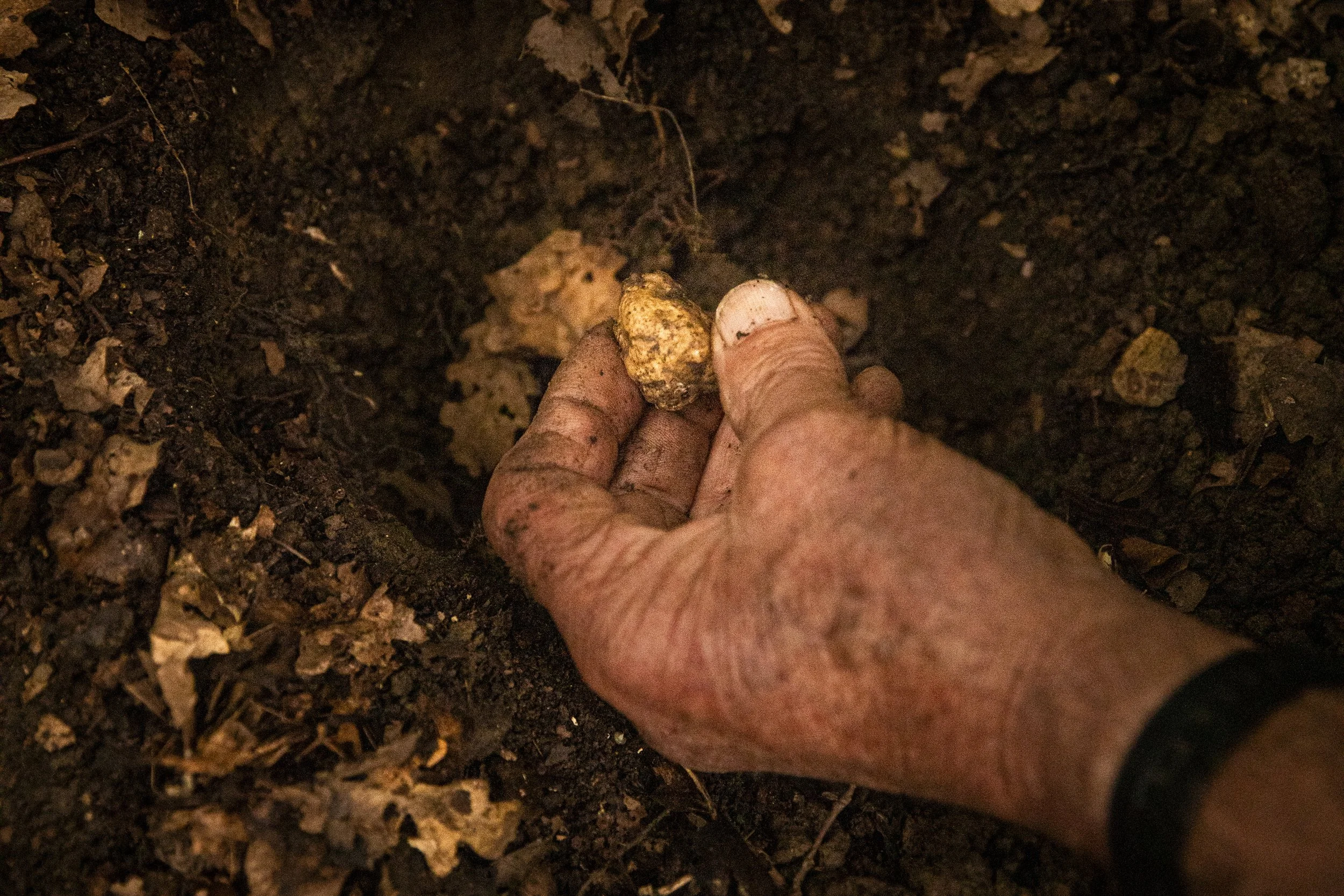
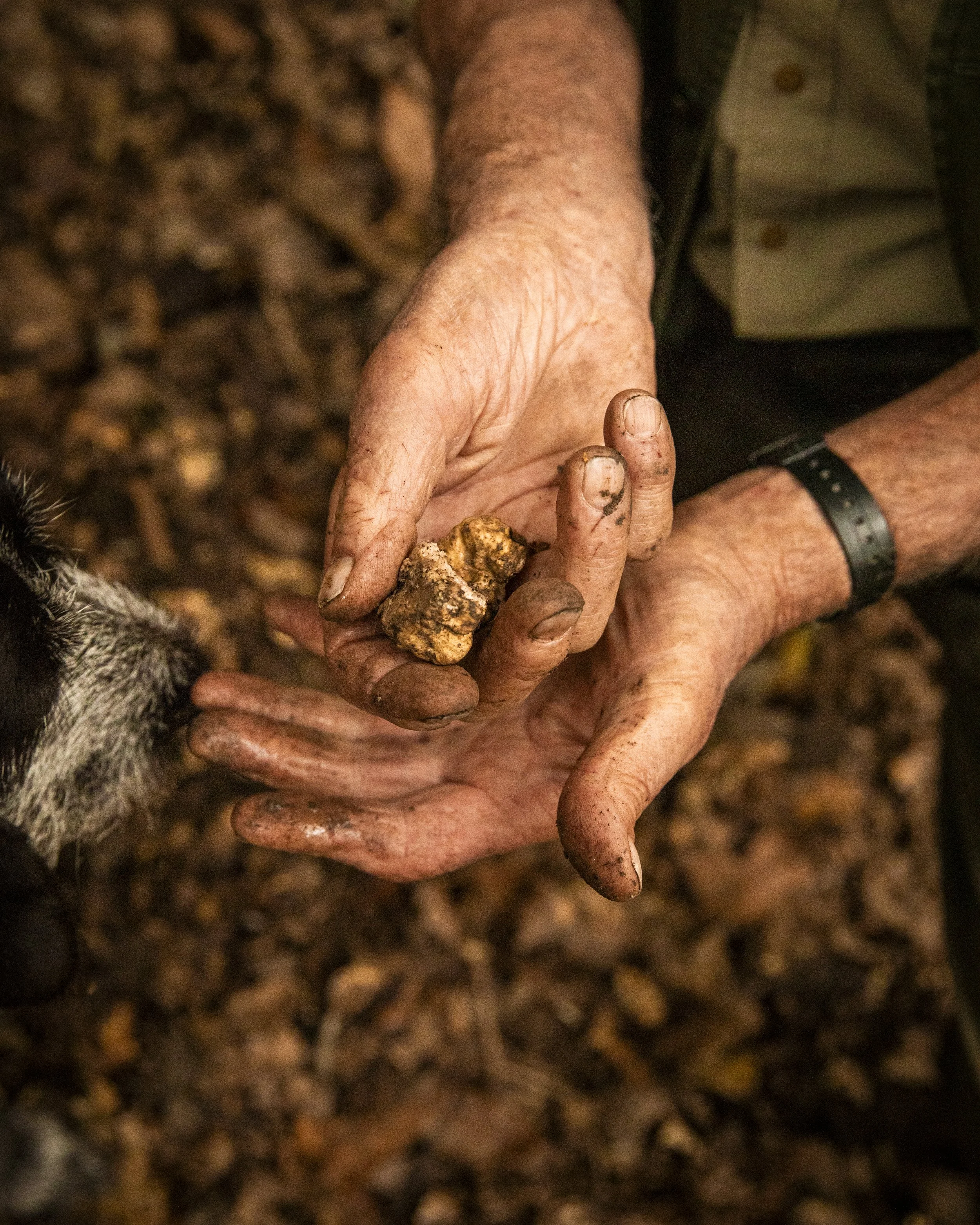
While the chiaro d’alba® is a legend in its own right, it’s just one chapter in a much richer tale.
Spring, summer, autumn, and winter each offer a variety of truffles, each with its own aroma, texture, and personality.
-
Nero Uncinato (Autumn Black Truffle)
The autumn variant of the summer truffle (Tuber Uncinatum), with darker flesh and a more pronounced flavour. Intense notes recall porcini, hazelnut and Grana cheese, along with classic woodland undertones. More aromatic and persistent than the summer scorzone. It can be gently warmed in a pan with butter or light extra virgin olive oil to infuse sauces, or sliced over the finished dish. Harvested from October to December (or January, depending on regional regulations).
-
Nero Pregiato (Black Winter Truffle)
The king of winter (Tuber Melanosporum), second only to the autumn white truffle in commercial and gastronomic value. It has an aromatic, fruity scent and a delicately sweet flavour. Also known as the black truffle of Norcia or Spoleto. Excellent thinly sliced raw, and famous in the classic Tournedos Rossini. Its sweet notes make it perfect for special mantecature and for pairings with chocolate and desserts. Harvested from mid-November to mid-March.
-
Nero Invernale (Brumale)
Also known as the “black trifola” or “cold-weather truffle” (Tuber Brumale), it often grows in the same habitats as the Nero Pregiato. It has a very dark, almost smooth skin and a smoky-grey interior with broad white veins. The aroma is intense and decisive, with notes of unripe hazelnut or turnip. In the kitchen it is prized because it withstands cooking very well in all forms. Harvested from mid-November to mid-March.
-
Bianchetto
The little brother of the Tuber Magnatum Pico (Tuber Borchii / Albidum Pico), with an intense, garlicky aroma. Globular, regular shape and a small size that rarely exceeds that of an egg. To be used strictly raw, sliced into very thin shavings over warm dishes just before serving. Harvested from mid-January to the end of April.
-
Nero Estivo (Scorzone)
The most common, affordable and versatile truffle, widespread across Europe (Tuber Aestivum). Delicate woodland aroma with notes of porcini and hazelnut. Hard, coarse skin covered in prominent dark pyramidal warts. It tolerates light, brief cooking. Perfect for tortelli fillings, omelettes, fried eggs, bruschetta, tagliolini and risotto. Harvested from May to November.